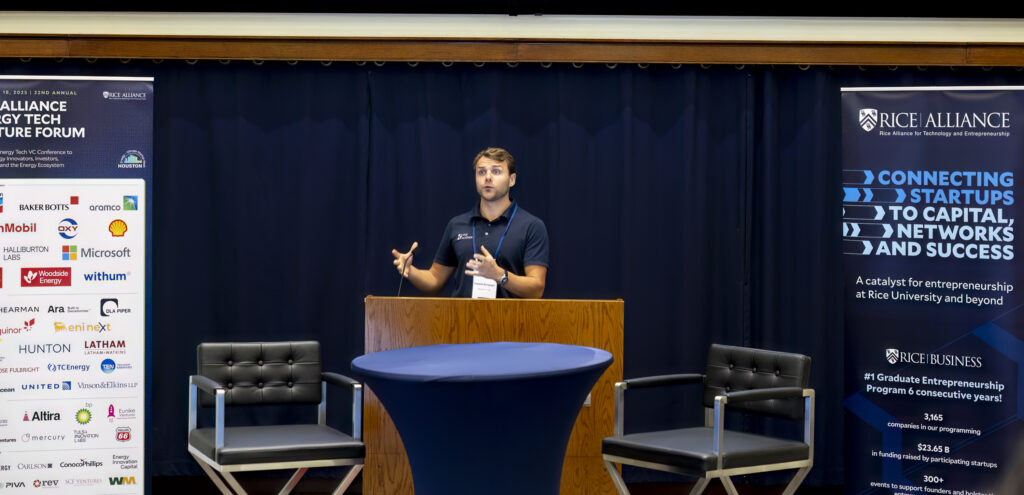
Champion Spotlight: Q&A with Sophia Cunningham

The third annual Houston Energy and Climate Startup Week is nearly here, and this year’s champions include Sophia Cunningham, Executive Director of the Houston Energy Transition Initiative (HETI), where she’s steering efforts to channel the region’s deep energy expertise into solutions for a lower-carbon, energy-abundant future.

Sophia stepped into the role in April 2026, after a decade at the Greater Houston Partnership, including as vice president at HETI overseeing carbon capture, methane management, and stakeholder engagement, and earlier as director of public policy. That background now shapes her leadership at HETI, where she’s focused on connecting Houston’s energy leaders around scalable, affordable solutions.

In our conversation, Sophia dives into Houston’s role at the center of the energy transition – sharing what she’s seeing across today’s climate startup ecosystem and where the biggest opportunities lie for founders building the next era of energy.

I’ve been at the Greater Houston Partnership for the last 10 years, but I took the helm of HETI earlier this year. At each turn in my time here, I’ve followed the work that felt most critical to Houston’s advancement. That has taken me from major transportation infrastructure projects, to flood resiliency after Hurricane Harvey, and ultimately to energy. 

Energy is quite literally what makes modern life and economic growth possible. It is also endlessly complex and constantly evolving. Houston has some of the best minds in the world working on these challenges, and we have a unique ability to take them on at scale. About 40% of Houston employment is tied directly or indirectly to the energy sector, so our region’s future and the future of energy are deeply interconnected. And that connection is only becoming more important: access to affordable, reliable power at scale has become one of the first filters companies use when deciding where to invest and grow. 

There are a lot of familiar challenges — access to capital, customers, pilots and the ability to navigate procurement inside large companies — but one we spend a lot of time thinking about at HETI is what’s called the “missing middle.” 

Energy technologies can make it through the lab and even through a successful first-of-a-kind project, but the journey from that first project to the nth-of-a-kind deployment at commercial scale is incredibly difficult. That is where founders need customers willing to engage, experienced project developers, investors with the right risk appetite, technical validation and partners who understand how to scale complex infrastructure. 

We’ve made progress in Houston. HETI has worked to bring the national labs into closer relationship with our industry and university ecosystem, and we are seeing more collaboration among Gulf Coast universities. But there is more to do. It is also about culture. Founders and investors need to be able to immerse themselves in an innovation ecosystem, and Houston increasingly has that through places and organizations like Greentown Labs, the Ion, TEX-E, Activate, Halliburton Labs and many others. 

Houston’s opportunity is not to become something entirely different from what made us the energy capital of the world. It is to use those capabilities — engineering, project development, capital, infrastructure, operating expertise and deep customer relationships — to help build the next era of energy

That creates an enormous opportunity for entrepreneurs because the problems that need solving are here. We are seeing real momentum in power and grid technologies, from better sensing and monitoring to distributed generation and efficiency; AI and digital tools that improve industrial operations; advanced nuclear; and geothermal. Those are all areas where Houston has technical expertise, customers and physical assets that can help entrepreneurs test and scale solutions. And Houston has always been good at finding opportunity in periods of change. That mindset matters. 

One of Houston’s greatest advantages is the density of people who know how to build and operate complicated things at enormous scale. 

We have one of the largest concentrations of engineering talent in the country, including chemical engineers, and we also have something I think is distinctive in our startup ecosystem: people moving into entrepreneurship during a second or third act of their careers after years inside industry. In some markets, startup teams are coming almost directly out of universities. Houston certainly has strong university-born innovation too, but we can also surround those founders with people who have spent 20 or 30 years developing projects, operating plants, managing risk, navigating permitting and selling into industry. 

Solidec is a good example of the other side of that equation. It grew out of research at Rice University, became a Houston startup and is continuing to grow here. That is the kind of continuum we want more of — university research becoming a company, and then that company having access to the customers, technical talent, infrastructure and partners it needs to scale. 

Houston’s challenge is making those assets easier for founders to navigate and access. We have an extraordinary set of ingredients. The next step is continuing to connect them more deliberately. 

Start with the problem you are solving and the value you create. 

Founders understandably care deeply about their technology and their mission, but a customer first needs to understand: What problem are you solving for me? Does it work? What does it cost? How does it improve my operations or economics? And what will it take to deploy at scale? 

The same discipline applies when talking to investors or communities. You have to understand what matters to the audience in front of you and communicate the value in those terms. 

I would also encourage founders to find mentors inside the industry who will pressure-test their thinking. Someone who has actually built projects, bought technology or navigated a large organization can often see hurdles much earlier than you can. The best mentors will challenge your assumptions, help you anticipate where things can go wrong and tell you when you need to pivot. That kind of feedback can be invaluable. 

For me, part of the opportunity is simply showing people how much is happening in Houston. 

Houston’s innovation story has grown substantially, but I still think people outside the region — and sometimes even people here — underestimate the number of companies, investors, entrepreneurs, universities and established energy companies working on new technologies. 

We are starting to see that momentum translate into results. Houston startups brought in nearly $1 billion in venture capital in the first half of this year. That does not mean the ecosystem has finished the job, but it is a strong signal that progress is being made. 

I hope people leave Startup Week with a much better sense of the scale and seriousness of what is happening here — and with new relationships that help move a technology, investment or partnership forward. 

Energy innovation is ultimately a team sport. A founder may have the technology, but scaling it can require a customer, an investor, engineering expertise, a university or national lab partner, infrastructure and often community support. 

The value of Startup Week is creating a concentrated period when those worlds collide. You get founders in rooms with people who might become their customers or mentors. Investors see technologies they might otherwise miss.  

Established companies get exposure to new ideas and potential solutions to real business problems. 

Meaningful progress is what happens after the week is over. Did someone leave with a pilot opportunity? Did a founder meet a customer who helped reshape the product? Did an investor begin diligence? Did two organizations realize they should be working together? Those connections are what ultimately strengthen the ecosystem.

You’ll find me at the anchor events and several others throughout the week, and our HETI team will be showing up in force. 

One of the things I like most about Startup Week is that there isn’t one single place where the ecosystem lives. The value comes from moving around the city, meeting people you don’t normally encounter and seeing the range of activity happening across Houston. I’m looking forward to doing exactly that. 

What excites me most about this moment is that we have entrepreneurs developing new technologies, universities producing extraordinary research, established companies that understand how to operate at global scale, and a growing network of investors and partners around them. If we continue connecting those pieces and making Houston a place where technologies can move from an idea to deployment and ultimately to scale, there is no reason Houston should not lead the next era of energy. 


Join HETI and the ION to kickoff Houston Energy + Climate Startup Week.
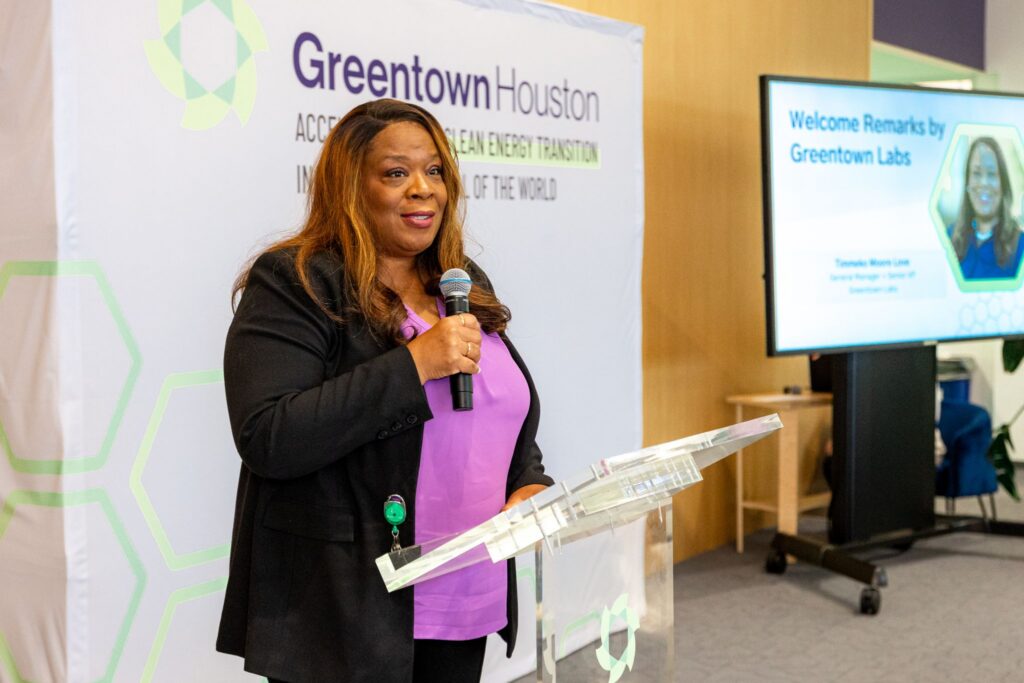
A New Stage for Greentown Labs Houston: The Climatetech Summit 

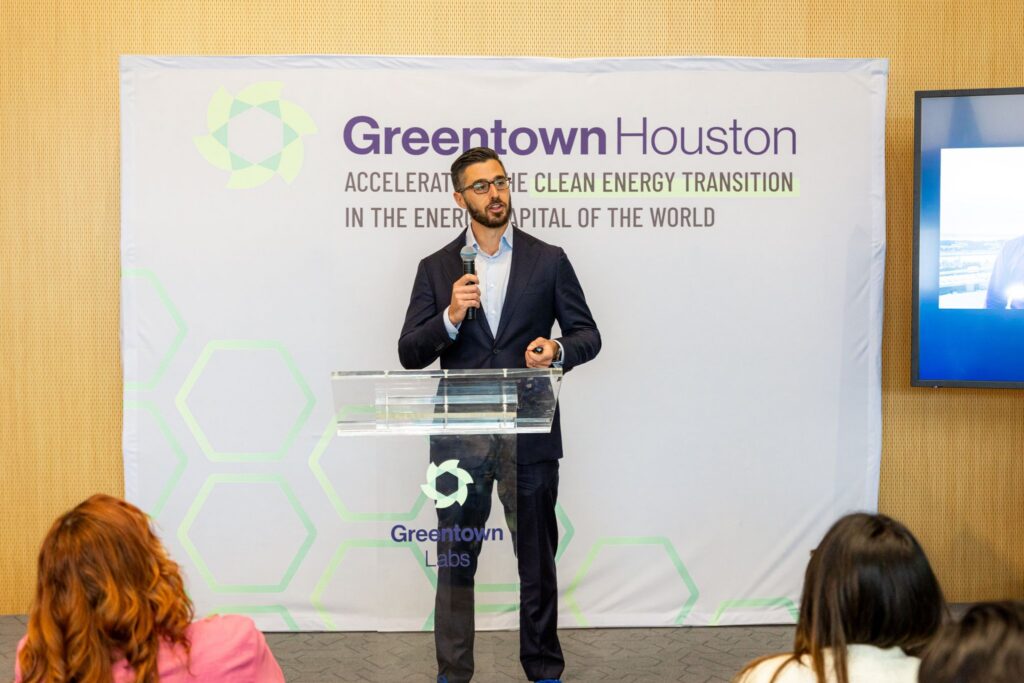
Houston Energy + Climate Startup Week is back for its third annual year. This year brings a notable change: founding partner Greentown Labs is expanding its anchor event into a full day of programming across three venues on Wednesday, September 16 — Greentown Houston’s 2026 Climatetech Summit.  

For five years, Greentown Labs has backed climate and energy startups from its incubator in the Ion District — the first of its kind in Houston — and helped shape Houston Energy + Climate Startup Week since day one. That belief has anchored its programming each year, built around the founders, mentors, and communities behind the work. Here’s a look back at what Greentown has brought to past editions.

Climatetech Innovation Festival: Stories from Schools to Startups. During the inaugural week, this half-day of programming connected the university pipeline to the startup floor. Founder journeys — including keynotes from SUPERGirls SHINE Foundation’s Loretta Williams Gurnell and GigaDAC’s Harrison Rice — ran alongside breakthrough-tech talks on forever chemicals, virtual power plants, and decarbonized steel. A founders’ panel closed out the morning with sector perspectives on climate impact across manufacturing, electricity, and resiliency.


2025

From Local to Global: Helping Climatetech Startups Succeed Internationally. Held at the Ion, this panel turned the conversation outward: moderated by Greentown’s Lawson Gow, it drew perspectives from an Australian founder who scaled into the U.S., a Nordic startup incubator, and Australian trade officials, followed by flash pitches from ten founders across Norway, Australia, and Houston. 

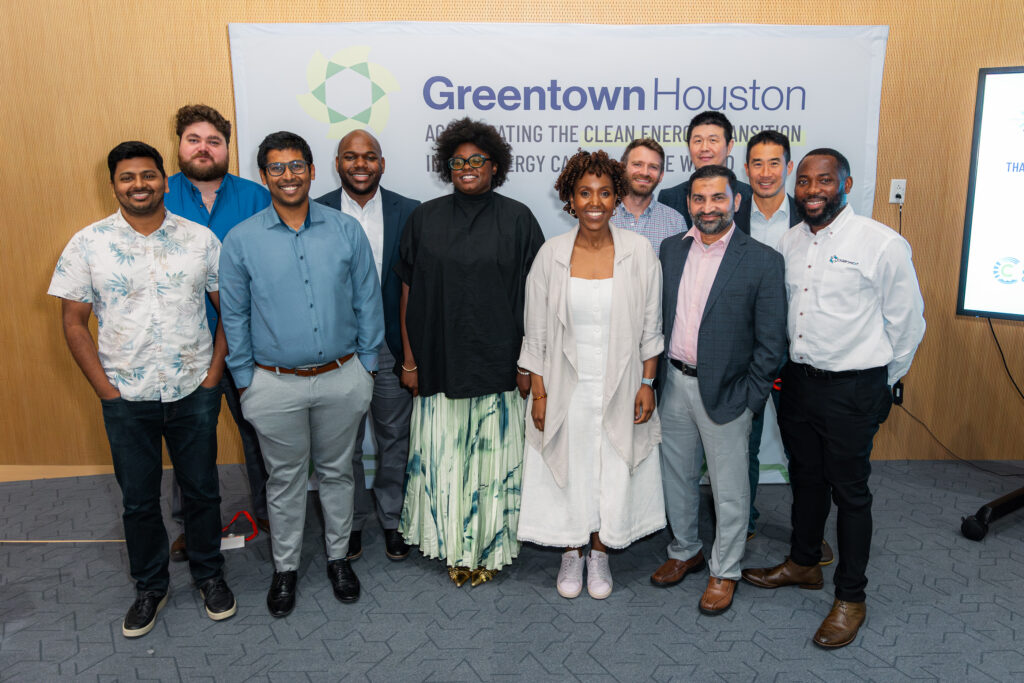
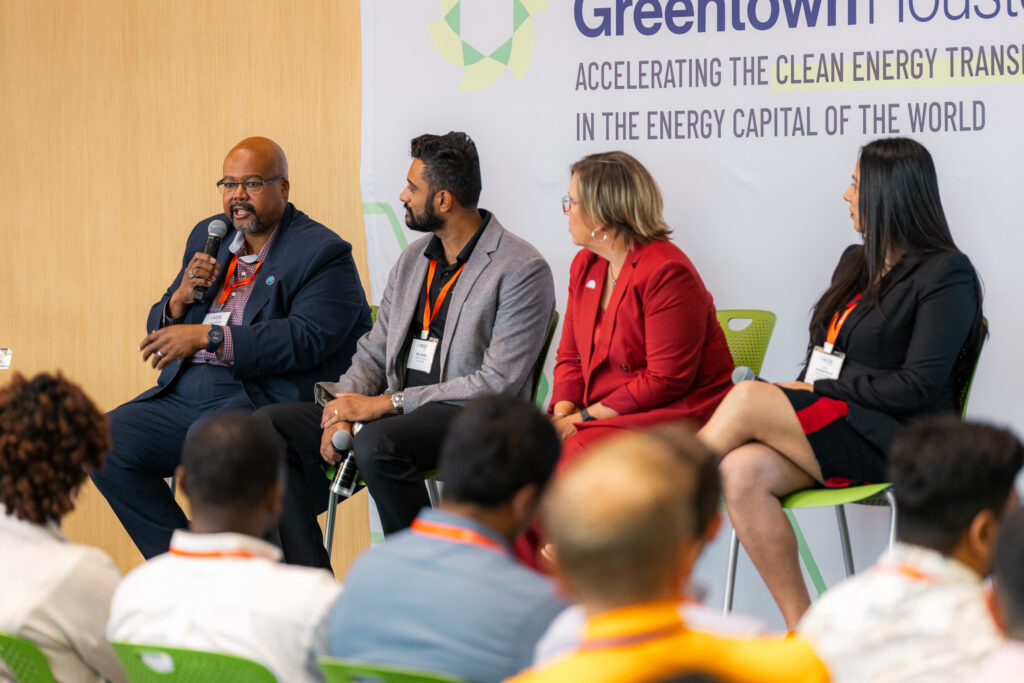
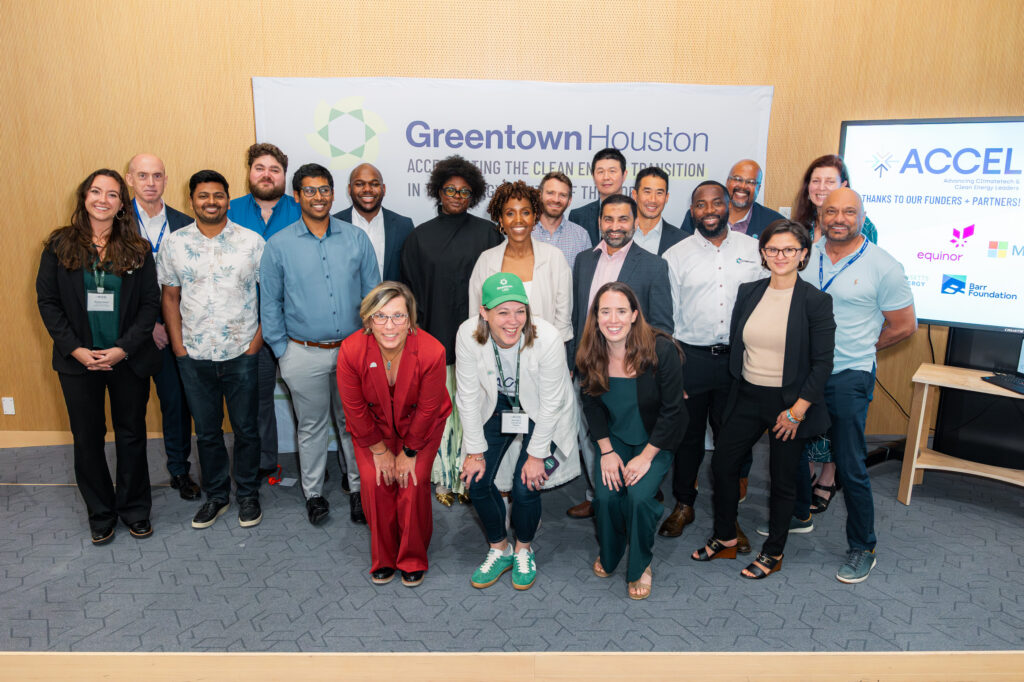
ACCEL Year 3 Showcase. The ACCEL Showcase celebrated the third cohort of the accelerator Greentown runs with Browning the Green Space for BIPOC and other underrepresented founders. A panel on transitioning into climatetech as an underrepresented founder paired with pitches from eight cohort startups, their work spanning cleaner ammonia, rare-earth recovery, and plastic-to-fuel conversion. 

This week demonstrated how #Boston and #Houston ecosystems can work together to make that support all the more effective. Houston’s got the goods – Strong engineering talent, diverse workforce, and direct access to energy customers.

Lawson Gow

Greentown Labs

Bet on the entrepreneur

September 16 unfolds across three venues and three acts: a morning of big-stage keynotes and panels, a midday of startup showcase and lightning pitches, and an evening of head-to-head pitching and happy hour. Here’s how the day breaks down

8:00 AM–12:15 PM → The Ion 

The summit kicks off with welcome remarks from Greentown Labs CEO Georgina Campbell Flatter, followed by a keynote fireside chat with Fervo Energy CEO Tim Latimer on scaling Wall Street’s biggest clean energy IPO. From there, the morning moves to panels covering what it takes for climatetech companies to scale, the U.S. nuclear renaissance, and the energy demands of the AI boom. 

🔗 Hear from Georgina Campbell Flatter on Houston’s influence in the energy transition.

12:30 PM – 4:00 PM → Greentown Labs Houston

 Midday moves to Greentown Labs Houston for lunch, an open house, and a startup showcase. Lightning pitches and hands-on time put attendees face-to-face with 50+ member startups working across climate, energy, and industrial verticals. 

🔗 See who’s building at Greentown Houston.  

5:00 PM – 9:00 PM → Continental Club

The day closes out at Continental Club with a pitch competition and happy hour. Startups compete for a grand prize while attendees’ network with founders, investors, and energy-transition leaders. 

Where the right people find each other

Moving Greentown Houston’s Climatetech Summit to Houston Energy and Climate Startup Week — it’s a bet that the biggest problems, like meeting rising energy demand while cutting emissions, get solved when founders, investors, corporates, and policymakers share a room instead of working in silos. 

As Ingrid Velasco, Director of Strategic Programs & Events, puts it:

“There is a tremendous amount of work happening behind the scenes to solve our global climate challenges. Houston Energy and Climate Startup Week is a unique opportunity to get a sneak peek at what the latest solutions are and get a sense of where we are going next.” 

For Greentown, this means opening its Houston labs so attendees can see the latest solutions from its climatetech startups up close and get a read on where the field is headed. 

Save your seat 

The Climatetech Summit is the premier gathering of the people accelerating the climate, energy, and industrial transformation. “Greentown Houston is thrilled to bring our Climatetech Summit to Houston Energy + Climate Startup Week this year. Our flagship event brings together climatetech founders, investors, partners, and friends to share knowledge and champion our shared vision for the future of energy: more energy, less emissions,” says Kelsey Kearns, Head of Houston, Greentown Labs. 

The climate challenge has never been a single problem with a single solution. It runs through every system that shapes how we live, from how we power our lives and move through cities to how we build, grow food, and manage the natural resources the whole planet depends on. Meeting it takes innovation across all of those systems at once, and it takes the full ecosystem moving together. “I’m deeply grateful to be part of this incredible ecosystem and to watch it showcase the hard work each and every person has put in”, Kearns said.  

At Greentown, the bet is on the entrepreneur, and no founder succeeds alone.  

If you’re a founder, an investor, or a corporate partner working in energy, climate, or industrial tech, the agenda was built with you in mind. Over the day, you will hear from industry leaders, step inside Greentown’s labs to meet the startups building the technology and connect with the dealmakers and operators shaping what comes next. 

This is where the right people find each other.  

🔗 Claim your spot at the Summit 

Houston Energy Startups You Met in 2025: Where Are They Now 

Last September, founders from around the globe came together at the 2025 Houston Energy and Climate Startup Week to pitch their ideas, meet investors and forge partnerships to scale solutions for the world’s growing energy and climate tech demands.

Nearly a year later, here’s what a handful of them have been up to since.

Deep Fission's Elizabeth Muller speaking during Halliburton Labs Finalist pitch day

During Houston Energy + Climate Startup Week 2025, Deep Fission pitched at Halliburton Labs’ Finalists Pitch Day, presenting its Gravity Reactor, a small modular reactor engineered to sit in a borehole roughly a mile underground and use rock and water pressure for containment and cooling. It had just been selected for the U.S. Department of Energy’s Reactor Pilot Program.

Over the past year, Deep Fission raised $80 million and formed a strategic relationship with Blue Owl Capital to deploy reactors for data center power. It filed for a Nasdaq IPO in May at a valuation of roughly $1.66 billion, then priced a smaller offering in June that brought in about $40 million, and has started moving toward a test site in Kansas. Its non-binding customer pipeline has grown to as much as 18.5 gigawatts. 

🔗 Learn more about Deep Fission.

Photo: Deep Fission Co-Founder, CEO, Board Chair, Elizabeth Muller during Halliburton Labs Finalists Pitch Day.

RICE ION Open House Open Office and Energy Tech Venture Forum 2025 100

During Houston Energy + Climate Startup Week 2025, Ammobia was named one of the 10 Most Promising Companies at the 22nd Rice Alliance Energy Tech Venture Forum, presenting its “Haber-Bosch 2.0” reactor for producing clean ammonia at far lower pressure and temperature than the standard process. 

Over the past year, Ammobia won Shell’s New Energy Challenge in the fall, then closed a $7.5 million seed round in January 2026 backed by Shell Ventures, Air Liquide, MOL Switch, and Chevron Technology Ventures. CEO Karen Baert took the company’s roadmap to the World Economic Forum in Davos

🔗 Learn more about Ammobia.

Photo: Ammobia Co-Founder, CEO, Karen Baert during Rice Alliance Energy Tech Venture Forum.

Found Peter Godart

During Houston Energy + Climate Startup Week 2025, Found Energy pitched at Halliburton Labs’ Finalists Pitch Day, showing off an aluminum-thermal system that pulls carbon-free heat and hydrogen out of scrap aluminum to decarbonize heavy industry. 

Over the past year, operating as Found Industries, the company completes its 100 kW power system pilot, including a vertically integrated catalyst production plant. They have also expanded from aluminum fuel into critical metals, using DOE support to build a domestic supply chain for gallium and other materials. In May 2026, they signed an MOU with ARES Strategic Mining to recover gallium and germanium from Utah’s Lost Sheep Mine.

🔗 Learn more about Found Industries.

Photo: Found Industries Co-Founder, CEO, Peter Godart during Halliburton Labs Finalists Pitch Day.

Non Chris Graves

During Houston Energy + Climate Startup Week 2025, Noon Energy pitched at Halliburton Labs’ Finalists Pitch Day, presenting an ultra-long-duration battery that stores energy for 100 or more hours using carbon and oxygen instead of scarce metals like lithium.

Over the past year, Noon unveiled a multi-day baseload demonstration of its storage system at a solar site in Yolo County, California, backed by an $8.76 million California Energy Commission grant (January 2026). In April it signed an agreement with Meta to reserve up to 1 GW / 100 GWh of capacity for data centers, starting with a 25 MW / 2.5 GWh project targeted for 2028. 

🔗 Learn more about Noon Energy

Photo: Noon Energy Co-Founder, CEO, Chris Graves during Halliburton Labs Finalists Pitch Day

During Houston Energy + Climate Startup Week 2025, Capwell delivered a flash pitch at From Local to Global: Helping Climatetech Startups Succeed Internationally, a Greentown Labs session at the Ion, where the Houston-based startup showed off its modular, skid-mounted methane-capture units built for the small, low-flow vents across oil and gas operations that have long been too costly to capture. 

Over the past year, Capwell landed a minority investment from Artemis Energy Partners, the energy-transition firm founded by Bobby Tudor, to scale manufacturing and expand pilots and field-service capacity. Capwell’s units capture methane from vents under 50 MSCFD and route it into the producer’s sales line instead of flaring it, turning a compliance cost into revenue, and the company participates in the DOE’s Methane Emissions Reduction Program.

🔗 Learn more about Capwell.

RICE ION Open House Open Office and Energy Tech Venture Forum 2025 II 1022

During Houston Energy + Climate Startup Week 2025, one of several Norwegian startups that came to Houston, was a presenting company at the Greentown Labs “From Local to Global: Helping Climatetech Startups Succeed Internationally,” where it pitched its “silicon brain,” a machine-agnostic AI platform that retrofits existing industrial equipment like wheel loaders, excavators, and forklifts so they can run autonomously.

Over the past year, HIVE raised $15 million, led by SuperSeed with participation from Veriten, Skyfall Ventures, and Nysnø, and is scaling deployments across Scandinavia, with offices in Norway and London and a U.S. expansion underway. On Norway’s exposed Vikafjellet mountain crossing, for example, a HIVE-retrofitted wheel loader now lets crews clear avalanche zones by remote supervision instead of waiting hours for on-site sign-off. 

🔗 Learn more about about HIVE.

Photo: HIVE Co- Founder and CCO Fredrik Bringager as a speaking company during Rice Alliance Energy Tech Venture Forum.

During Houston Energy + Climate Startup Week 2025, Celadyne was named one of the 10 Most Promising Companies at the 22nd Rice Alliance Energy Tech Venture Forum for its membrane technology designed to make hydrogen fuel cells and electrolyzers more durable and efficient. 

Over the past year, Celadyne secured a $250,000 investment from the University of Texas Seed Fund in spring 2026 to scale its Dura and Electra membrane products across defense, industrial, and transportation uses. The company continues to position its durable-membrane approach as a drop-in path to cheaper, longer-lasting fuel cells. 

🔗Learn more about Celadyne.


Houston Energy + Climate Startup Week returns this September — bigger, bolder, and ready to spotlight the next wave of startup innovation. Build your schedule today.  

Don’t Just Take Our Word for It: HECSW 2025 Through Attendees’ Eyes

Thinking about joining us for Houston Energy and Climate Startup Week 2026? Don’t just take our word for why it’s worth the trip. Last year, founders, investors, and industry leaders packed the city for a week of panels, pitches, and connections across Houston’s energy and climate ecosystem, and they took to social media to share. Here’s a look back at HECSW 2025, told through the people who were actually there. See what you missed, and get ready for what’s coming this September.

Houston, Home to the Most Complete Energy Value Chain in the World 

Houston isn’t just talking about energy transition — it’s building it. It’s a city where innovative people and organizations from across sectors come together to take the energy industry to the next level through collaboration, access to world-class facilities, exceptional talent, and relentless ambition.

What sets Houston apart is its complete energy value chain. From incubators and accelerators to corporate innovation labs, Houston offers startups something unique: direct access to the energy infrastructure they’re trying to transform. Every piece of the startup energy puzzle exists here. The infrastructure, expertise, and capital that already power the world are now being leveraged to build the future of the energy transition. 

The depth of Houston’s energy ecosystem becomes clear when you hear from leaders across this ecosystem: 

Jeremy Pitts(Activate)Jane Stricker (Houston Energy Transition Initiative / Greater Houston Partnership), Sandy Guitar (TEX-E), Brad Burke (Rice Alliance / Ion District ), Taylor Chapman (New Climate Ventures), Eric Rubenstein (New Climate Ventures), Lawson Gow (Greentown Labs), Andres Cabada (Halliburton Labs), and Chuck Yates (Collide). Together, they represent the diversity of thought that fuels the most impactful climate innovation activity across the city.

Champion Spotlight: Q&A with Georgina Campbell Flatter 

Houston Energy and Climate Startup Week is nearly here, and this year’s champions include leaders who are shaping the future of climate technology. Among them is Georgina “Georgie” Campbell Flatter, CEO of Greentown Labs, who steers the world’s largest climate tech incubator as it fuels the next generation of companies racing to solve our biggest environmental challenges. 

Georgie stepped into the role in February 2025. Since then, she’s been driving climate innovation forward and championing the next wave of energy startups. Her expertise spans the evolving landscape of climate tech, from emerging technologies to market dynamics. 

In our conversation, Georgie dives into Houston’s rising influence in the energy transition – sharing what she’s seeing across today’s climate startup ecosystem and where the biggest opportunities lie. 

I’ve built my career around one big idea: making technology matter. You can’t spend a decade at MIT—surrounded by game-changing ideas, learning from rockstars such as Bob Langer, Fiona Murray, and Bill Aulet—without innovation becoming part of your DNA. That experience taught me that while innovation is essential, it’s the intentional innovation infrastructure—incubators, testbeds, incentives, role models and bridges between communities (public, private, NGO, and academia)—that turns ideas into real-world impact. 

My ties to Greentown stretch back to the very beginning. The founders are such wonderful people—I know them well—and I’ve also personally experienced the generosity, mentorship, and collaborative spirit of this community. Entrepreneurship is hard, and community matters. Stepping into this role feels like both a privilege and a way to give back. 

The next decade belongs to entrepreneurs. Their grit, creativity, and bold ideas will power the innovations, jobs, and partnerships driving the energy transition. As one of our Houston founders put it: “Hard is fun—but it’s easier when the infrastructure and community are built for you to win.” That’s why Greentown exists—to remove friction so startups can move faster and smarter. 

And where better to do that than in our two home cities—Houston, the energy capital of the world, and Boston, the innovation capital of the world. Together, they unite industry depth with innovation speed—and I’m incredibly lucky to lead an organization that’s such a critical part of both cities and of the global climate and energy ecosystem.

Founders consistently highlight four priorities: product development, customers, capital, and talent—and in energy and climatetech, each comes with extra hurdles. 

On product development: Building hardtech requires more than a desk and a laptop—you need equipment to build, space to make, the right ventilation and safety systems, and access to permits. Even rent negotiations can slow a founder down. Greentown’s role is to speed all of that up. 

On customers and partnerships: In Houston especially, the city is full of experienced customers—willing not only to buy but to put in the work alongside startups to help shape products for commercial readiness and scale. Those relationships are gold. 

On capital: VC is essential, but not sufficient. The energy transition demands a capital stack that matches reality—longer timelines, larger infrastructure, and complex regulatory environments. The best founders blend VC with grants, philanthropic funding, corporate pilots, and project finance. 

On talent: Finding and keeping the right team is mission-critical—these entrepreneurs are creating the jobs of the future. Greentown is also a training ground for the future energy and climate workforce, where innovation, grit, and growth mindsets are built. 

Greentown exists to help founders navigate all of this—removing roadblocks, connecting them to the right capital, customers, and talent so they can get their solutions into the world faster. 

Houston is already the energy capital of the world—and it’s primed to become the energy transition capital of the world. 

The city’s legacy players bring extraordinary resources: technical expertise, industrial infrastructure, global networks, and capital. As one founder said, “Steel flows like water in Houston.” Another told me, “If you’re building real, hard-charging hardware, Houston is the best deep-tech city in the country.” 

Greentown’s role is to connect those assets to entrepreneurs with the solutions—driving pilots, investments, and customer partnerships that get technologies scaled. 

Houston’s superpower is industrial readiness at scale. It’s a place where you can find machine shops, pilot plant expertise, and deep technical talent in chemical engineering. For example, Texas has one of the highest concentrations of chemical engineer jobs in the U.S. As one founder put it: “The one thing missing in many ecosystems is flexible infrastructure to build—everyone’s figuring it out alone. Here, we have it. Now we just need to keep refining it so the best startups can plug in and thrive.”

Lead with your full story—technology, purpose, and the positive impact you’ll have on people and communities. Don’t underestimate the value of clearly showing how your innovation will deliver for people, planet, and profit. 

Diversity drives innovation. ACCEL, now in its third year, is proof of that. This year, eight startups—each with six months in the program—will showcase their work. The showcase convenes the ecosystem—investors, corporates, and ecosystem leaders—who can open doors and accelerate their growth. ACCEL is proof that representation strengthens the entire ecosystem. 

Houston is a special city for innovators—it blends deep industrial expertise with a collaborative, community-driven spirit. And it’s building an identity around energy and climate innovation. Startup Week is a chance to spotlight that leadership and forge the connections that will take solutions from idea to scale. 

This innovation ecosystem is delivering more energy with fewer emissions, unlocking economic opportunity and job growth, and fostering the collaborations that propel climatetech from the lab into communities—fast and at scale. This week is here to turbocharge that momentum—because we can go further, faster, together. And at Greentown, everyone’s welcome.  


Check out the ACCEL Year 3 Showcase from Greentown Labs during Houston Energy + Climate Startup Week.  
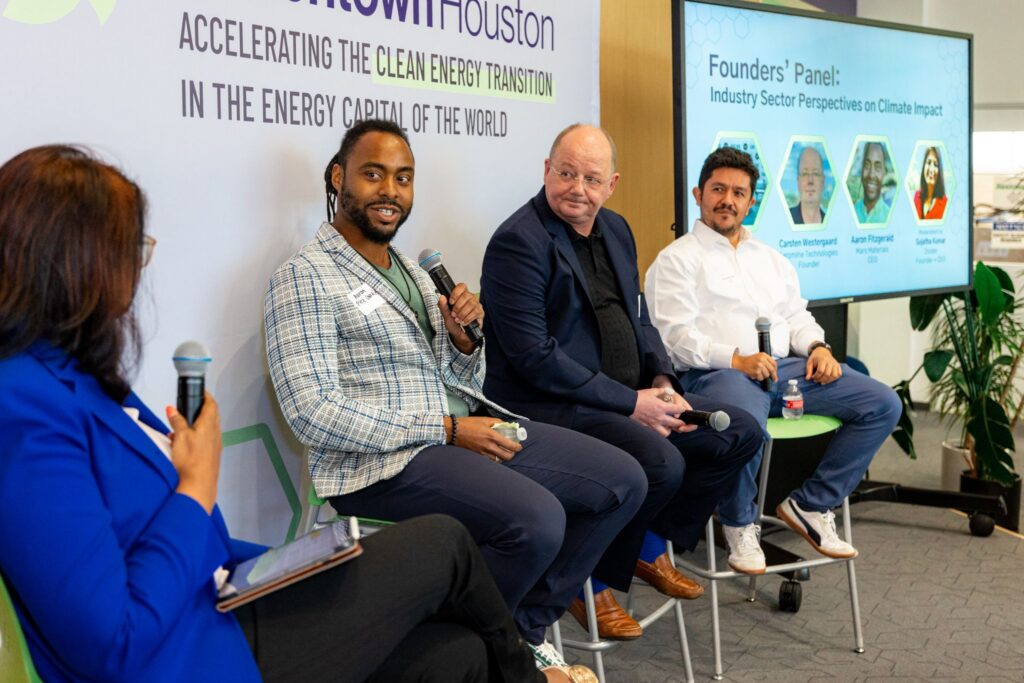
New Ecosystem Leaders Join 2025 Houston Energy and Climate Startup Week

HOUSTON (August 11, 2025) – Houston Energy and Climate Startup Week returns September 15–19, 2025, bringing together top climate and energy investors, industry leaders, and startups from around the world. As funding becomes increasingly critical to scaling climate solutions, this year’s event expands with new partners to help innovators connect with the capital and collaborators needed to drive impact.

Launched in 2024 through a collaboration between Halliburton Labs, Rice Alliance for Technology and Entrepreneurship, Houston Energy Transition Initiative (HETI), Ion, Greentown Labs, Activate, and Collide, the inaugural event drew over 2,000 attendees, 125 startups, and more than 100 speakers across 30+ events to discuss energy innovation and climate solutions.

“The organizations and events hosted at the Houston Energy and Climate Startup Week showcase the city as a national hub for the energy future,” said Brad Burke, Associate VP for Industry and New Ventures at Rice University and Executive Director of the Rice Alliance, a founding partner for the week. “As a cornerstone week for global energy investors, startups and technology leaders, we encourage organizations to add to the week! Whether you’re exploring breakthrough tech, meeting investors, or simply eager to connect with others driving change, this week offers something for every innovator.”

With a strong mix of regional leadership and national participation, the week serves as a powerful platform to spotlight Houston’s leadership in energy innovation. Houston’s thriving energy and climate innovation ecosystem continues to be demonstrated thanks to the collaborative efforts of our community partners and our many corporate supporters. The list of partners continues to grow, including: New Climate Ventures, Decarbonization Partners, University of Houston, Energy Tech Nexus, TEX-E, Chevron and Avatar Innovations.

 “Last year’s events exceeded our expectations, and 2025 is looking even stronger. As early-stage climate tech investors, we’re thrilled to be part of it.  As Bill Gates noted last year, Houston is poised to be the “Silicon Valley of energy,” and this week showcases that leadership. It brings together world-class founders, co-investors, and industry partners who have the engineering prowess, balance sheets, and capital-projects expertise to scale these solutions. As Gates said, “If you want to see what the cutting edge of next-gen clean energy innovation looks like, it’d be hard to find a place better than Texas.” Taylor Chapman, New Climate Ventures, Investment Principal.

This year builds on that momentum, with a robust schedule of panels, pitch sessions, and networking events taking place citywide, including several events hosted in the Ion District, Houston’s innovation hub, powered by Rice University. Energy ventures will present breakthrough technologies driving a low-carbon energy future with opportunities to engage top venture capital, private equity, and strategic corporate investors. 

“What sets Houston apart is our ability not just to pilot ideas—but to fund, scale, and commercialize them,” said Jane Stricker, Executive Director of the Houston Energy Transition Initiative and Senior Vice President of the Greater Houston Partnership. “As the energy capital of the world, Houston is uniquely equipped to bring together the capital, talent, and infrastructure needed to grow the next generation of climate and energy solutions.  Houston Energy and Climate Startup Week showcases the region’s bold innovation and growing momentum in solving the dual challenge of delivering more energy with less emissions.”

For the full schedule and to stay updated on Houston Energy and Climate Startup Week, visit https://houstonenergyclimatestartupweek.com/.

About Houston Energy and Climate Startup Week
Houston Energy and Climate Startup Week is a collaborative, city-wide initiative dedicated to advancing solutions for the energy transition. Launched by Rice Alliance for Technology and Entrepreneurship, Halliburton Labs, Greentown Labs, Houston Energy Transition Initiative (HETI), Collide and Activate, the annual activation brings together startups, investors, and industry leaders to showcase innovation and drive meaningful impact. Events are hosted by many organizations across the city.

MEDIA CONTACT:

Lou Ann Duvall

Vice President, Marketing and Communications

Greater Houston Partnership

lduvall@houston.org

Applications for Halliburton Labs Now Open + Call for Energy Ventures for the Rice Alliance Energy Tech Venture Forum!

Houston Energy and Climate Startup Week is ramping up with exciting opportunities for energy and climate innovators. Two major events tied to this year’s Houston Energy and Climate Startup Week are closing their applications soon. 

Halliburton Labs is now accepting applications for its next cohort! This is an opportunity for startups working to advance cleaner, affordable energy. Selected companies will gain access to Halliburton Labs’ facilities, expertise and global network. Pitch day for the upcoming cohort will take place during Houston Energy and Climate Startup Week. Don’t miss your chance to be part of it—apply by July 25. Apply here »

Meanwhile, the call for energy ventures is also open for the 22nd Annual Rice Alliance Energy Tech Venture Forum—an anchor event for the Houston Energy and Climate Startup Week and one of the premier energy VC conferences in the region. This event connects ventures with investors and industry leaders through one-on-one meetings and pitch opportunities. Applications close July 18. Apply here »

Stay tuned for more updates as we continue building momentum for Houston Energy and Climate Startup Week!

Houston Energy and Climate Startup Week Announces 2025 Dates

The second annual conference returns September 15-19, 2025, to accelerate the development and scaling of real solutions for the dual challenge.

(Houston, Texas) Building on the success of its inaugural year, Houston Energy and Climate Startup Week will return September 15-19, 2025, bringing together thousands of startups, investors, and industry leaders from around the world.

“Houston Energy and Climate Startup Week was created to answer a fundamental question: Can we achieve more by working together than we can alone?” said Jane Stricker, Senior Vice President, Greater Houston Partnership and Executive Director, Houston Energy Transition Initiative. “By joining forces, we’re strengthening Houston’s role as a global leader in energy innovation, uniting top talent to turn bold ideas into real solutions. In 2024, we set out to build something with lasting impact—rooted in the ingenuity of Houston’s technologists and founders. Thanks to a collaborative effort across industry, academia, and startups, we’ve only just begun to showcase Houston’s strengths and invite others to be part of this movement. We can’t wait to see the city rise to the occasion again in 2025.”

Founded by Rice Alliance for Technology and Entrepreneurship, Halliburton Labs, Greentown Labs, Houston Energy Transition Initiative (HETI), Digital Wildcatters and Activate, this city-wide initiative was launched to showcase Houston is developing and scaling real solutions for the dual challenge—meeting growing global energy demand while reducing carbon emissions. The event’s inaugural year in 2024 demonstrated the power of this collaboration, drawing more than 2,000 attendees across 30+ events, featuring 100+ speakers and 125+ startups.

Anchor Events for 2025 Include:

  • Monday, September 15
    • Official Kickoff Event at the Ion, hosted by HETI
  • Tuesday, September 16
    • Activate Meet the Cohort
  • Wednesday, September 17
    • Rice Alliance Energy Tech Venture Forum (Invite-only Startup/Investor Office Hours)
  • Thursday, September 18
    • Rice Alliance Energy Tech Venture Forum at Rice University
    • Greentown Labs ACCEL Showcase
  • Friday, September 19
    • Halliburton Labs Pitch Day at the Ion

In addition to these marquee events, returning programming from New Climate Ventures, Digital Wildcatters, and Global Corporate Venturing are already confirmed. New partners, including Decarbonization Partners and Avatar Innovations, are also joining the lineup. With the date announced, the founding partners invite 2024 hosts and others, to begin planning their events and programs. Calendar submissions will be opened in May.

Programming will take place across Houston, with the Ion District, powered by Rice University, serving as a key hub.

For more information and to get involved, visit houstonenergyclimatestartupweek.com

About Houston Energy and Climate Startup Week
Houston Energy and Climate Startup Week is a collaborative, city-wide initiative dedicated to advancing solutions for the energy transition. Launched by Rice Alliance for Technology and Entrepreneurship, Halliburton Labs, Greentown Labs, Houston Energy Transition Initiative (HETI), Digital Wildcatters and Activate, the annual activation brings together startups, investors, and industry leaders to showcase innovation and drive meaningful impact. Events are hosted by many organizations across the city.

Celebrating 25 Years of Innovation: Repsol Kickstarts Houston Energy + Climate Startup Week with Top Startups and Industry Leaders

Houston hosted the inaugural Energy + Climate Startup Week in September, which brought together leading energy and climate venture capital investors, industry leaders and startups from around the world to showcase the most innovative companies and technologies that are transforming the energy industry while driving a sustainable, low-carbon energy future.

Repsol was one of the inaugural sponsors for the weeks kick off event that hosted several leading startups. This year marked 25 years of energy innovation for Repsol in the United States.  As the energy landscape evolves, Repsol has committed to significant growth in renewable capacity, with an impressive 720 MW of solar and storage capacity already operational and 1.5 GW under construction.

Caton Fenz, CEO for Repsol’s Renewables North America shares more about Repsol’s approach to expanding its renewable footprint, integrating green energy into its core business and leveraging Houston’s unique role as a leader in the energy transition. Here’s an inside look at Repsol’s milestones and future goals in the journey toward decarbonization and a sustainable energy future.

Can you tell us more about Repsol’s strategy for expanding its renewables business?

This year Repsol is celebrating 25 years of energy development in the United States. Across the US, we have a team of more than 800 employees, with more than 130 employees working in the renewables business specifically. 

Repsol’s growth ambition in the US renewable energy market is significant. Since launching our renewables activity in the US three years ago, we have installed more than 720 MW of solar generation and energy storage capacity. Today we have more than 1.5 GW of additional solar and energy storage capacity under construction, and more than 20 GW of solar, wind and energy storage in development across 13 states.

 How does Repsol plan to integrate renewable energy sources into its broader business model?

Repsol Renewables operates in accordance with Repsol’s values and strategies. Renewable energy generation is one of the pillars of Repsol’s decarbonization strategy. Repsol will invest between €3 and 4 billion to organically develop its global project portfolio and aims to reach between 9,000 MW and 10,000 MW of installed capacity by 2027. Of this, 30% will be in the United States.

With these objectives in mind, we have been able to accelerate the development of wind, solar, and energy storage across the US market and the globe. By expanding our renewable energy business, we can further meet record demand growth for renewable energy.  

What are the key projects or milestones that have been achieved within Repsol’s renewables portfolio so far?

Earlier this year, we announced the commercial operation of Frye Solar, our largest solar project worldwide. This project, located in Swisher County, Texas, has a total capacity of 637 MW.  And as noted above, we have an additional 1.4 GW of projects under construction currently.  These major energy infrastructure projects are indicative of the scale of our operations in the US.

Why does Repsol believe being located in Houston is critical for its business, particularly in the energy transition?

Repsol is proudly committed to Houston’s role in developing and delivering energy and value for the world. Houston is known as the Energy Capital of the World and over the next 10 years, we’ll see it be known as the Energy Transition Capital of the World. With Repsol’s Renewables North America business located in downtown Houston, we have access to talent and partnerships in a booming city filled with energy experts. 

Why does Repsol see value in participating in Houston Energy + Climate Startup Week?

At Houston Energy + Climate Startup Week, Repsol Renewables is honored to support and learn from leaders and investors in the energy and climate industry. We believe it is important to continuously invest in talent, ideas, and collaboration across the energy value chain as we pursue our net zero by 2050 goal.

Back to top