Champion Spotlight: Q&A with Sophia Cunningham
Houston has always found opportunity in moments of change. The energy system is going to continue evolving. The question for Houston is not whether we change with it, but whether we use the extraordinary capabilities we already have to help drive where it goes next.
Sophia Cunningham, Executive Director, Houston Energy Transition Initiative (HETI)
The third annual Houston Energy and Climate Startup Week is nearly here, and this year's champions include Sophia Cunningham, Executive Director of the Houston Energy Transition Initiative (HETI), where she's steering efforts to channel the region's deep energy expertise into solutions for a lower-carbon, energy-abundant future.
Sophia stepped into the role in April 2026, after a decade at the Greater Houston Partnership, including as vice president at HETI overseeing carbon capture, methane management, and stakeholder engagement, and earlier as director of public policy. That background now shapes her leadership at HETI, where she's focused on connecting Houston's energy leaders around scalable, affordable solutions.
In our conversation, Sophia dives into Houston's role at the center of the energy transition – sharing what she's seeing across today's climate startup ecosystem and where the biggest opportunities lie for founders building the next era of energy.
You've spent your career at the intersection of energy policy, workforce development, and now the energy transition. What led you to your current role as SVP, Energy and Executive Director of the Houston Energy Transition Initiative?
I’ve been at the Greater Houston Partnership for the last 10 years, but I took the helm of HETI earlier this year. At each turn in my time here, I’ve followed the work that felt most critical to Houston’s advancement. That has taken me from major transportation infrastructure projects, to flood resiliency after Hurricane Harvey, and ultimately to energy.
Energy is quite literally what makes modern life and economic growth possible. It is also endlessly complex and constantly evolving. Houston has some of the best minds in the world working on these challenges, and we have a unique ability to take them on at scale. About 40% of Houston employment is tied directly or indirectly to the energy sector, so our region’s future and the future of energy are deeply interconnected. And that connection is only becoming more important: access to affordable, reliable power at scale has become one of the first filters companies use when deciding where to invest and grow.
In your view, what are the primary challenges founders in the energy and climate ecosystem are currently facing?
There are a lot of familiar challenges — access to capital, customers, pilots and the ability to navigate procurement inside large companies — but one we spend a lot of time thinking about at HETI is what’s called the “missing middle.”
Energy technologies can make it through the lab and even through a successful first-of-a-kind project, but the journey from that first project to the nth-of-a-kind deployment at commercial scale is incredibly difficult. That is where founders need customers willing to engage, experienced project developers, investors with the right risk appetite, technical validation and partners who understand how to scale complex infrastructure.
We’ve made progress in Houston. HETI has worked to bring the national labs into closer relationship with our industry and university ecosystem, and we are seeing more collaboration among Gulf Coast universities. But there is more to do. It is also about culture. Founders and investors need to be able to immerse themselves in an innovation ecosystem, and Houston increasingly has that through places and organizations like Greentown Labs, the Ion, TEX-E, Activate, Halliburton Labs and many others.
What role do you believe Houston specifically plays in the future of energy transition, and what opportunities do you see for entrepreneurs in this market?
Houston’s opportunity is not to become something entirely different from what made us the energy capital of the world. It is to use those capabilities — engineering, project development, capital, infrastructure, operating expertise and deep customer relationships — to help build the next era of energy.
That creates an enormous opportunity for entrepreneurs because the problems that need solving are here. We are seeing real momentum in power and grid technologies, from better sensing and monitoring to distributed generation and efficiency; AI and digital tools that improve industrial operations; advanced nuclear; and geothermal. Those are all areas where Houston has technical expertise, customers and physical assets that can help entrepreneurs test and scale solutions. And Houston has always been good at finding opportunity in periods of change. That mindset matters.
Drawing from your experience leading HETI's coalition of industry, academic, and community partners, what does Houston offer startups that you don't see in other markets?
One of Houston’s greatest advantages is the density of people who know how to build and operate complicated things at enormous scale.
We have one of the largest concentrations of engineering talent in the country, including chemical engineers, and we also have something I think is distinctive in our startup ecosystem: people moving into entrepreneurship during a second or third act of their careers after years inside industry. In some markets, startup teams are coming almost directly out of universities. Houston certainly has strong university-born innovation too, but we can also surround those founders with people who have spent 20 or 30 years developing projects, operating plants, managing risk, navigating permitting and selling into industry.
Solidec is a good example of the other side of that equation. It grew out of research at Rice University, became a Houston startup and is continuing to grow here. That is the kind of continuum we want more of — university research becoming a company, and then that company having access to the customers, technical talent, infrastructure and partners it needs to scale.
Houston’s challenge is making those assets easier for founders to navigate and access. We have an extraordinary set of ingredients. The next step is continuing to connect them more deliberately.
What advice would you give founders who are struggling to articulate their mission in ways that resonate — not just with customers, but with investors and communities whose buy-in ultimately drives growth and impact?
Start with the problem you are solving and the value you create.
Founders understandably care deeply about their technology and their mission, but a customer first needs to understand: What problem are you solving for me? Does it work? What does it cost? How does it improve my operations or economics? And what will it take to deploy at scale?
The same discipline applies when talking to investors or communities. You have to understand what matters to the audience in front of you and communicate the value in those terms.
I would also encourage founders to find mentors inside the industry who will pressure-test their thinking. Someone who has actually built projects, bought technology or navigated a large organization can often see hurdles much earlier than you can. The best mentors will challenge your assumptions, help you anticipate where things can go wrong and tell you when you need to pivot. That kind of feedback can be invaluable.
As a champion for Houston Energy + Climate Startup Week, what does that role mean to you, and what do you hope attendees take away from the week?
For me, part of the opportunity is simply showing people how much is happening in Houston.
Houston’s innovation story has grown substantially, but I still think people outside the region — and sometimes even people here — underestimate the number of companies, investors, entrepreneurs, universities and established energy companies working on new technologies.
We are starting to see that momentum translate into results. Houston startups brought in nearly $1 billion in venture capital in the first half of this year. That does not mean the ecosystem has finished the job, but it is a strong signal that progress is being made.
I hope people leave Startup Week with a much better sense of the scale and seriousness of what is happening here — and with new relationships that help move a technology, investment or partnership forward.
Why is it important to have events like Startup Week bring together industry, startups, and community in one place — and what does meaningful progress look like for the ecosystem coming out of it?
Energy innovation is ultimately a team sport. A founder may have the technology, but scaling it can require a customer, an investor, engineering expertise, a university or national lab partner, infrastructure and often community support.
The value of Startup Week is creating a concentrated period when those worlds collide. You get founders in rooms with people who might become their customers or mentors. Investors see technologies they might otherwise miss.
Established companies get exposure to new ideas and potential solutions to real business problems.
Meaningful progress is what happens after the week is over. Did someone leave with a pilot opportunity? Did a founder meet a customer who helped reshape the product? Did an investor begin diligence? Did two organizations realize they should be working together? Those connections are what ultimately strengthen the ecosystem.
Where will we find you during Startup Week? What are the must-attend events on your calendar?
You’ll find me at the anchor events and several others throughout the week, and our HETI team will be showing up in force.
One of the things I like most about Startup Week is that there isn’t one single place where the ecosystem lives. The value comes from moving around the city, meeting people you don’t normally encounter and seeing the range of activity happening across Houston. I’m looking forward to doing exactly that.
Looking ahead, what excites you most about this week for Houston's energy transition?
What excites me most about this moment is that we have entrepreneurs developing new technologies, universities producing extraordinary research, established companies that understand how to operate at global scale, and a growing network of investors and partners around them. If we continue connecting those pieces and making Houston a place where technologies can move from an idea to deployment and ultimately to scale, there is no reason Houston should not lead the next era of energy.
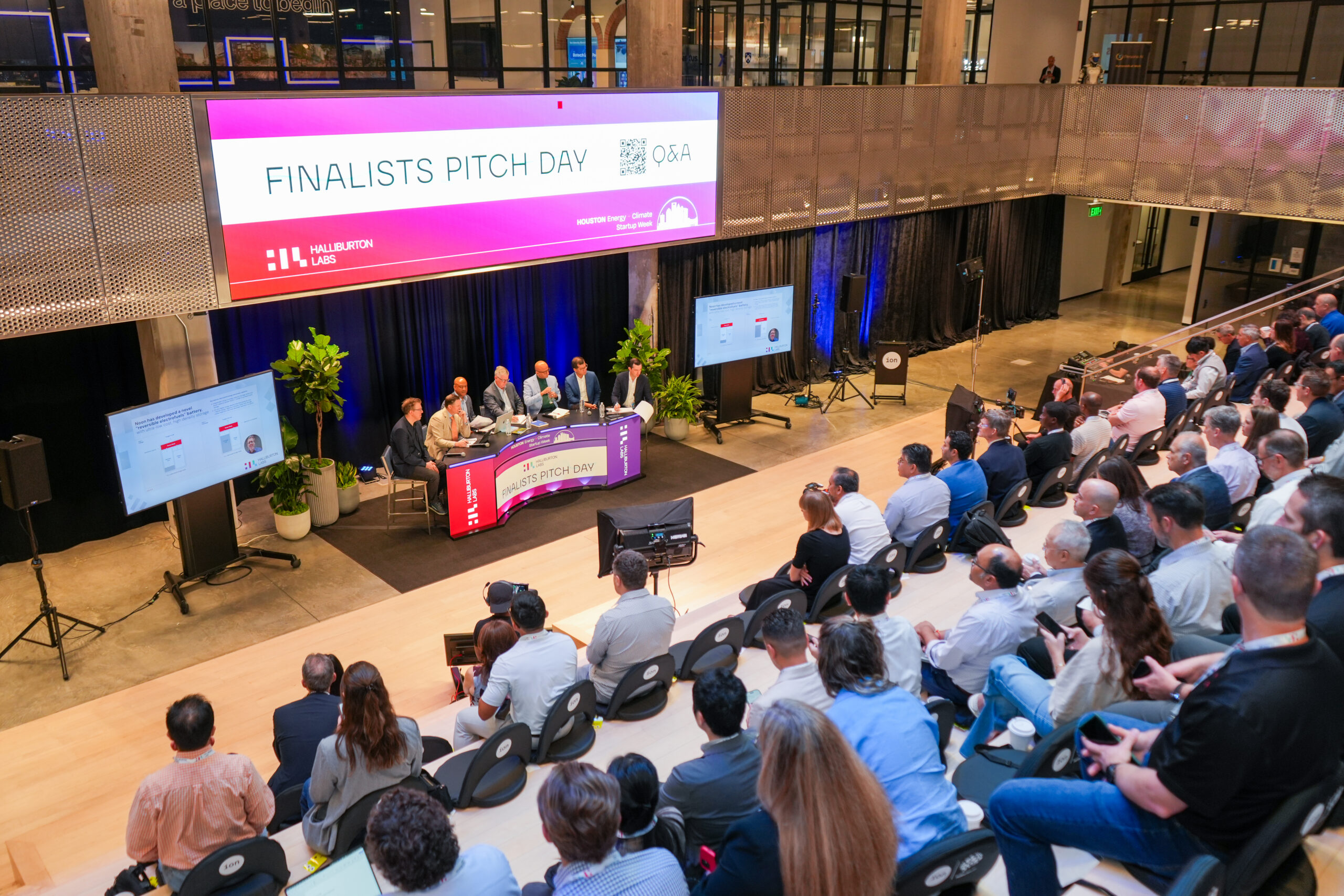
Join HETI and the ION to kickoff Houston Energy + Climate Startup Week.